Washington's food code is direct about rodents. WAC 246-215-06550, which adopts section 6-501.111 of the FDA Food Code, says the premises of a food establishment must be maintained free of insects, rodents and other pests, and it names the control methods expected of the business. In Spokane County, Spokane Regional Health District inspects restaurants and other food businesses against that code.
This guide explains the rule, how SRHD's inspections and report form work, what tends to get a kitchen in trouble and what to do if droppings turn up before or during an inspection.
What the food code requires
WAC 246-215-06550 is titled "Methods: Controlling pests." Its main requirement is that the premises be kept free of infestations of insects, rodents and other pests, so that no breeding population exists in the facility. It then names the control methods a food business is expected to use to get there.
That means a single mouse sighting is a problem, but an active population with droppings in dry storage is a much bigger one. Inspectors look for signs that rodents are living and breeding inside: fresh droppings, gnawed packaging, nests, rub marks and live or dead animals.
The code expects the business to take action on its own, not wait for the inspector. A pest control contract, regular service and records of it are the usual way to show that.
How SRHD inspects
SRHD's food establishment inspections page says the health district inspects each food establishment in Spokane County one to two times a year. Its report form page says complex restaurants are inspected at least two times per year and all other establishments at least once.
Violations are written on the inspection form, and the person in charge is told what corrective action is needed. SRHD sorts violations into two kinds:
- Red, high risk: food handling practices that, when not done properly, are most likely to lead to foodborne illness. These must be corrected immediately.
- Blue, low risk: violations that must be corrected within a set time frame.
Each violation carries points, and SRHD says red high-risk items usually have higher point values than blue low-risk items. Its report form page does not list point values for pest violations, so this guide does not either.
Restaurant with rodents? Get a technician in after close.Free call. You are connected with an independent provider near you.
(509) 401-4897Tap to callReinspection and closure
According to SRHD's report form page, a repeat violation found at a second re-inspection results in permit suspension and temporary closure. Being unable to correct the most serious violations may also lead to temporary closure. Follow-up inspections occur within 30 days after a second re-inspection.
Rodent problems can escalate the same way any repeat violation does. Droppings found once and cleaned up, with a pest control visit documented, is a manageable write-up. Droppings found again at the next visit is how a business ends up facing reinspection fees and possible closure.
SRHD offers downloadable inspection reports for food establishments on its website. Full inspection reports can be requested through a public records request.
What gets kitchens in trouble
Most restaurant rodent problems come from a few places:
- The back door. Doors propped open during deliveries, worn sweeps and gaps at the threshold let mice and rats in.
- The dumpster area. Overflowing dumpsters, open lids and grease bins feed rats a few feet from the kitchen.
- Dry storage. Bags of flour, rice and sugar on the floor or against walls give mice food and cover.
- Under equipment. Grease and crumbs under fryers, ranges and coolers that do not get pulled out and cleaned.
- Basements. Many older buildings downtown, in the Garland District and in Hillyard have basements with stone foundations, old utility openings and stored items.
- Drains and pipe openings. Gaps around pipes through walls and floors.
Cold weather matters here too. When fall arrives, mice move into warm buildings across the city, and kitchens are warm and full of food.
How a pest program should work in a restaurant
Inside food areas, traps are the standard tool. Loose rodenticide near food is a bad idea, and product labels limit where bait can go. The US EPA's rodenticide rules require tamper-resistant bait stations for professional products wherever children, pets or nontarget wildlife may get access, and for all above-ground outdoor uses. Outside, locked stations along the perimeter and near the dumpster are common.
A solid restaurant program has:
- An inspection of the kitchen, storage, back door, basement and dumpster area
- Traps along walls, under equipment and in storage, checked on a schedule
- Exterior stations if needed, following the label
- Sealing of gaps at doors, around pipes and at floor and wall joints
- A short list of sanitation fixes for the kitchen team
- A service report after every visit, plus a device map
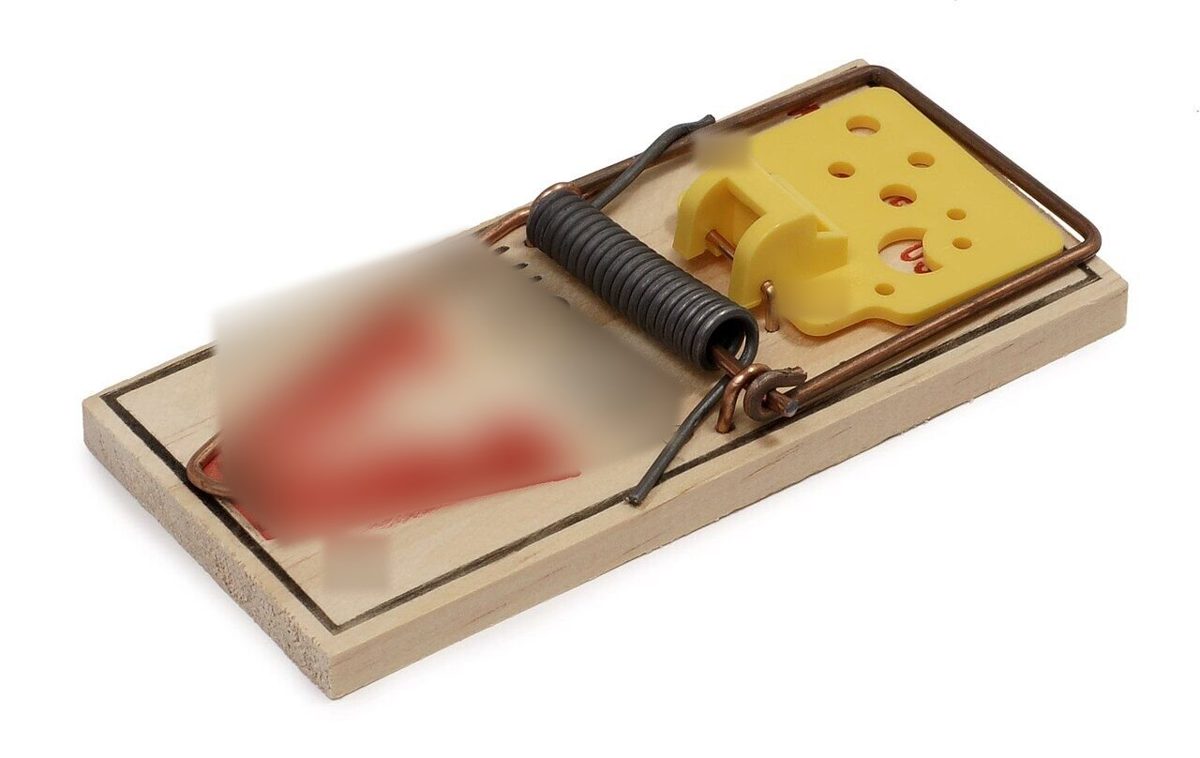
CDC's trapping guidance applies in a kitchen as much as a home: snap traps set perpendicular to the wall with the bait end touching it. Glue traps are discouraged because they can scare rodents into urinating.
For providers in the Spokane area, see restaurant rodent control and commercial rodent control.
If droppings turn up before an inspection
Act the same day. Steps that help:
- Throw out any food that rodents could have touched, and any packaging with gnaw marks.
- Clean droppings with disinfectant, not a broom or vacuum. CDC says to wet them with disinfectant or a bleach solution and let it soak for 5 minutes or as the label directs before wiping.
- Sanitize food contact surfaces in the area.
- Call a licensed pest control provider and ask for a visit that night or before the next opening.
- Check the back door, dock and dumpster area for obvious problems you can fix right away.
- Keep every record: the invoice, the service report, photos of repairs and your cleaning log.
If an inspector writes up rodent activity, follow the corrective actions on the report, get the pest control service documented and fix the entry points before the follow-up. A provider who can show what was found and sealed helps your case.
Reporting a restaurant
If you see rodents in a Spokane County restaurant as a customer or employee, SRHD's food safety page links to a "Food safety concern" form. The food safety program can be reached at 509-324-1560, extension 2, and the main district number is 509-324-1500. For suspected foodborne illness, SRHD points people to the Washington State Department of Health's Foodborne Illness Notification System.
For other rodent complaints around the city, see the reporting guide.
Talk to a local rodent technicianFree call. Ask for a written plan and quote before any work starts.
(509) 401-4897Tap to callCommon questions
Can a restaurant use rat poison in the kitchen?
Loose bait near food is a bad idea and labels limit placement. Providers use traps inside food areas and locked, tamper-resistant stations outside.
How often does SRHD inspect restaurants?
SRHD says it inspects each food establishment one to two times a year, with complex restaurants at least twice.
Is a rodent problem a red or blue violation?
SRHD's report form page explains red high-risk and blue low-risk categories but does not list the point value for pest violations. Talk to your inspector about your report.
Can a restaurant be closed for rodents?
SRHD says a repeat violation at a second re-inspection results in permit suspension and temporary closure, and being unable to correct the most serious violations may also lead to closure.
How do I report a restaurant with mice?
Use SRHD's food safety concern form online or call the food safety program at 509-324-1560, extension 2.
Sources
- WAC 246-215-06550: Controlling pests (FDA Food Code 6-501.111)
- Spokane Regional Health District: Food establishment inspections
- Spokane Regional Health District: Understanding the inspection report form
- Spokane Regional Health District: Food safety
- US EPA: Restrictions on rodenticide products (archived January 2025 snapshot)
- CDC: Trap up to control rodents
- CDC: Clean up after rodents
This guide is general information, not legal advice. Rules change, so check the linked official sources for your situation.