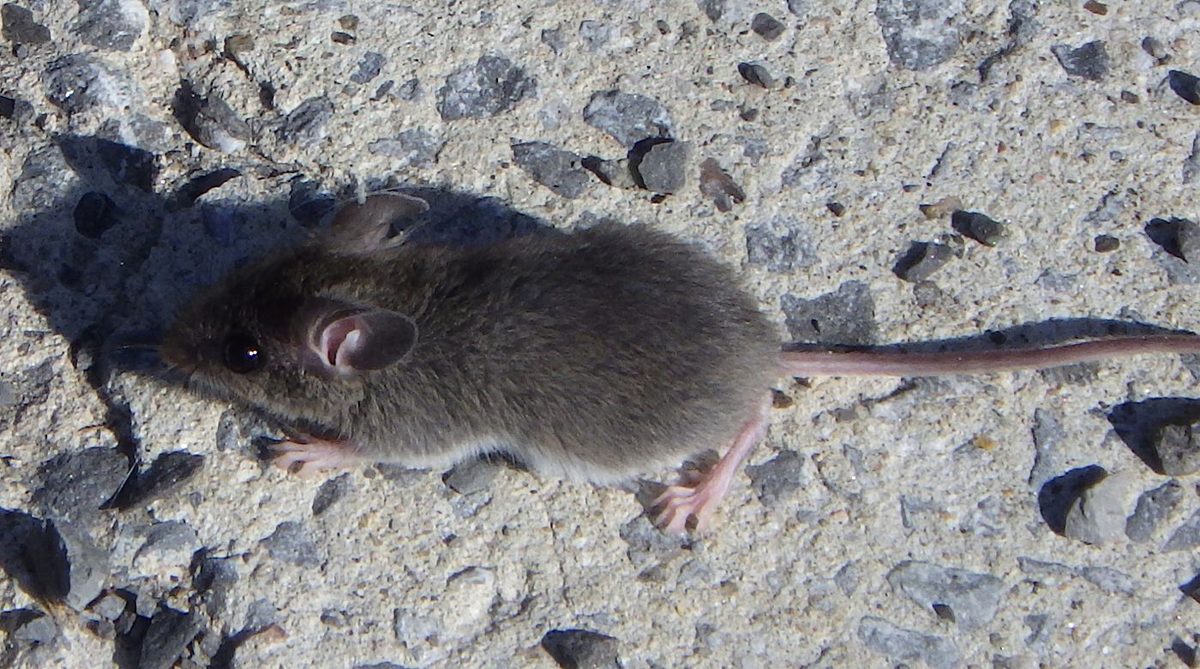
How mice end up in your walls
Wall cavities are hollow spaces between studs, and they connect to the crawl space, the basement, the attic and the gaps around plumbing and wiring. Mice use them as hallways. They come up from below along pipes, travel inside the wall and come out under the kitchen sink, behind the stove or through a gap at a baseboard.
You usually hear them more than see them. The sound is light scratching or scurrying, often at night or early morning, and it may move along the wall or up toward the ceiling. Rats in walls sound heavier, more like thumping or dragging.
Cutting into walls is rarely the answer. A technician finds where the mice are getting into the wall cavities and where they come out into the living space, then traps at those points and seals the routes. If a mouse dies inside a wall, the smell can last for weeks, so placing traps where the catch can be retrieved matters. That is one reason bait inside a house is a poor choice. For more on sounds, see rodent noises at night.
What a thorough job includes
Ask what the provider will do about mice in the walls. A thorough job covers:
- Locating where the noise is and tracing it to likely entry points below or above
- Checking under sinks, behind the stove, dishwasher and refrigerator, and around pipes where they enter walls
- Inspecting the crawl space or basement for the routes mice use to reach the wall cavities
- Traps at the points where mice leave the walls, with return visits
- Sealing pipe and wire openings inside cabinets and at the foundation
- Exterior sealing at the foundation, sill and utility entries
- A plan for a dead mouse inside a wall if one happens
Step by step
- You describe where the noise is and when you hear it.
- A technician inspects the rooms near the noise and the crawl space, basement or attic connected to them.
- You get a written plan and price.
- Traps go where mice leave the walls: under sinks, behind appliances, in the crawl space and attic.
- Openings around pipes and wires get sealed inside cabinets and from outside.
- Return visits check traps until the scratching stops and no new droppings appear.
Want a technician to look at your place?Free call. You are connected with an independent provider near you.
(509) 401-4897Tap to callMice in Spokane walls
Older Spokane houses have walls built with balloon framing in some cases, where the stud cavities run from the foundation all the way up to the attic. Mice can climb from the crawl space straight to the second floor inside one cavity. Homes from the early 1900s in Browne's Addition, West Central and the South Hill often have this kind of framing.
Plaster-and-lath walls in older homes also leave gaps where the plaster meets the floor or where old pipes were removed. Each one becomes an exit for mice in the wall.
In newer homes, the usual path starts in the attached garage. Mice get under the garage door, climb inside the shared wall and come out in the kitchen or laundry room. Sealing the garage and the pipe openings behind the washer and dryer often stops the noise.
Fall is when most wall calls start in Spokane. The first cold nights push mice indoors, and they settle into the walls near heat: kitchens, bathrooms and rooms over the furnace.
What you can do tonight
A few steps help while you wait for an inspection. Put food away in sealed containers, especially cereal, rice, flour, pet food and bird seed. Wipe counters and sweep floors so there is nothing easy to find at night.
Set a few snap traps along the base of the wall where you hear the noise, under the kitchen sink and behind the stove, with the bait end touching the wall. Use a pea-sized dab of peanut butter.
Look under sinks and behind appliances for gaps around pipes. If you see daylight or a hole you can fit a pencil into, pack it loosely with steel wool for now. Do not seal outside entry points tight until the mice inside are caught.
Do not put poison bait inside the house. A mouse that eats it can die in the wall.
Write down when and where you hear the scratching each night. If it moves from room to room or gets louder over a week, that tells the technician the mice have more than one route.
Mice in Walls questions
Is the scratching in my wall mice or rats?
Light, quick scratching is usually mice. Heavier thumping or gnawing is more likely rats. Droppings near the wall help confirm it. See rodent noises at night.
Will the technician cut holes in my walls?
Rarely. Most of the time mice can be trapped where they leave the wall and the routes sealed without opening drywall or plaster.
What if a mouse dies inside the wall?
The smell usually fades in one to a few weeks as the body dries out. If it is strong and near a reachable spot, a technician can sometimes locate and remove it. See dead rodent removal.
Why not use poison for mice in walls?
A poisoned mouse often dies inside the wall, where you cannot reach it, and the smell lingers. Trapping lets you remove each catch.
How long until the scratching stops?
Often within one to two weeks once traps are placed and gaps sealed, though it depends on how many mice are inside.
Related reading
What to say when you call
Your call goes to an independent rodent control provider serving Spokane. A two-minute description gets you a better answer on timing and price.
Tell them
- ✓Rats or mice, if you know. Rice-grain droppings point to mice; capsule-shaped droppings a half inch or longer point to rats.
- ✓Where you see or hear them: attic, crawl space, basement, walls, kitchen, garage, shop or car engine.
- ✓Whether you found droppings in a shed, cabin or outbuilding. Deer mice live in those spots, and the cleanup needs care.
- ✓The building: older home on a rock or rubble foundation, house over a crawl space, newer home with an attached garage, apartment, restaurant or warehouse.
- ✓Your neighborhood or ZIP code and the best time for a visit.
- ✓What you have already tried, like snap traps, store bait or foam in a gap.
Ask them
- ?Does the company hold a WSDA pest control license, and does it include the pest control operator, General category?
- ?Will the technician seal entry points with metal-backed materials, or only set traps and bait?
- ?What does the price include, and how many return visits are part of it?
- ?Can I get the plan and the quote in writing before work starts?
- ?If there are droppings to clean up, how will the technician handle them without stirring up dust?
Stop the scratching in the walls
One free call connects you with an independent rodent technician who works the Spokane area. Ask for a written plan and quote before work starts.
(509) 401-4897Spokane, WA · Tap to call