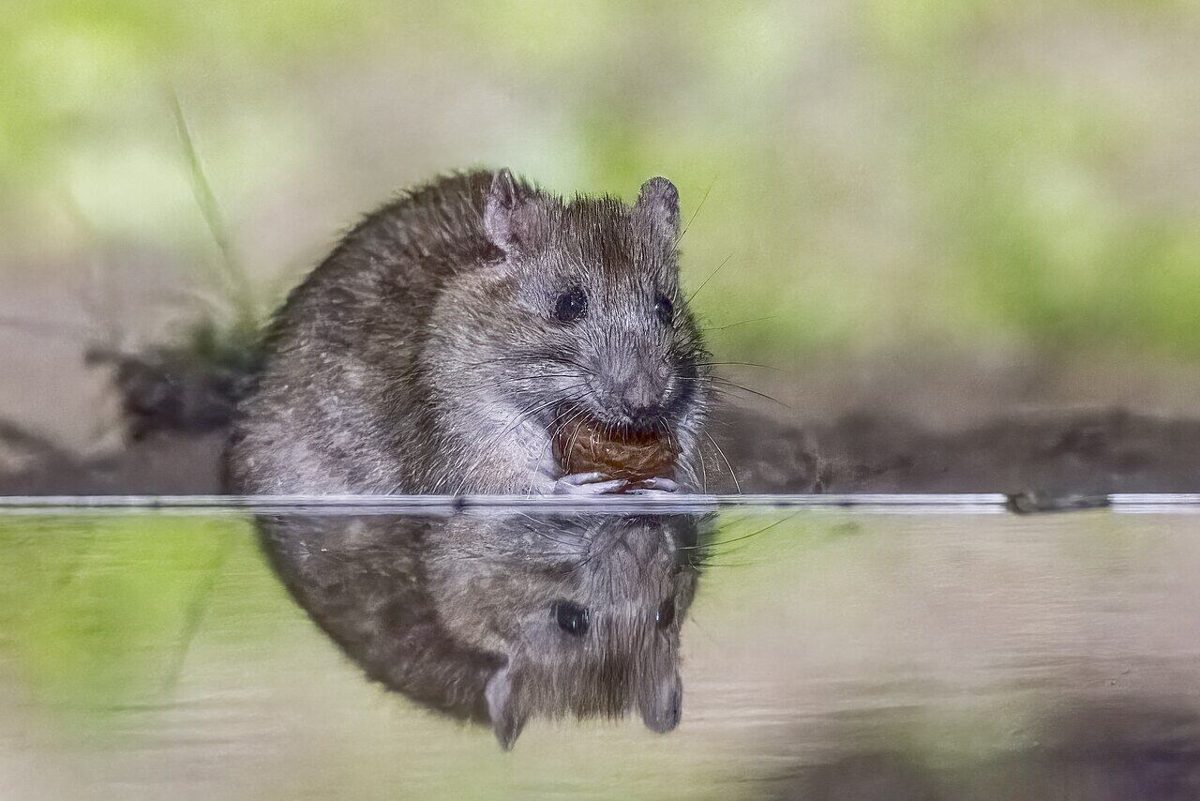
How Norway rats use burrows
Norway rats dig. A burrow system can have several entrances, tunnels and a nest chamber, usually in soft soil next to something solid: a foundation, a slab, a shed floor, a retaining wall or a pile of firewood. You may see smooth, packed dirt at the opening, a fan of loose soil and a worn path in the grass leading to food.
Burrows tell a technician a lot. An active one has fresh soil and no cobwebs or leaves across the opening. A simple check is to loosely fill the hole with soil or newspaper and see if it is reopened the next day.
Outdoor rats are a problem for two reasons. They feed on bird seed, compost, fallen fruit, pet food and garbage, and they move into the house when the weather turns. Treating burrows outdoors, along with yard cleanup, keeps the numbers down before they come inside.
Treatment options depend on the setting. A technician might trap at burrow openings, use bait in locked stations near the burrows, or apply bait directly into burrows where the product label allows it. EPA rules say outdoor burrow baiting is allowed only with pelleted bait placed at least six inches down active burrows.
What a thorough job includes
A good burrow treatment job usually covers:
- Mapping active burrows on the property and along fences you share with neighbors
- Identifying the food and cover drawing the rats: compost, bird feed, woodpiles, pet food, garbage
- Trapping at burrow entrances or bait in tamper-resistant stations, following label directions
- Rechecking burrows on return visits to see which reopen
- Collapsing and filling inactive burrows, sometimes with gravel or wire mesh to stop re-digging
- Sealing nearby foundation gaps so rats cannot follow a burrow into the house
- Yard recommendations in writing
Step by step
- A technician walks the yard, foundation and fence lines to find and count active burrows.
- You get a written plan explaining the treatment and any products to be used.
- Traps or bait stations go near active burrows. Any bait follows the product label.
- Return visits check which burrows reopen and adjust the plan.
- Inactive burrows are collapsed and filled. Foundation gaps nearby get sealed.
- You get a list of yard changes that remove food and cover.
Want a technician to look at your place?Free call. You are connected with an independent provider near you.
(509) 401-4897Tap to callRat burrows around Spokane
Burrows show up most often in the older parts of the city with alleys, detached garages and established gardens. In neighborhoods like Hillyard, West Central, Logan and the Perry District, rats burrow under garage slabs, along alley fences and in compost bins. Homes near the Spokane River gorge and Latah Creek see them along the banks and in thick brush.
Gardens and chickens draw rats too. Backyard coops, spilled feed and fallen apples from old fruit trees are common sources of food in Spokane yards. A rat colony near a coop can grow fast through the summer.
Weather affects burrow work here. Frozen ground in winter makes digging and treatment harder, so late summer and fall are the best time to deal with yard rats. Snow cover can hide burrow openings, but rats keep using them.
If you share an alley or fence with neighbors and see burrows on both sides, a block-wide effort works better. Rats move freely between yards.
Yard changes that stop new burrows
Burrows come back when food and cover stay. These changes help most in Spokane yards:
- Move bird feeders away from the house and fences, use a seed tray and pick up spills.
- Feed chickens in a covered feeder and pick up spilled grain every evening. Store feed in metal cans.
- Use a closed compost bin with hardware cloth under it. Keep meat, dairy and greasy scraps out.
- Pick up fallen apples and other fruit.
- Stack firewood a foot off the ground and away from the house and fences.
- Close the space under decks and sheds with hardware cloth buried a few inches into the soil.
- Keep garbage cart lids shut and do not overfill them.
The City of Spokane asks residents not to let material stick out of garbage carts, and it handles junk and refuse on neighboring properties through Code Enforcement. See the trash and yard rules guide.
These steps also make treatment work better. With less food around, rats are more likely to take traps or bait in stations.
Rat Burrow Treatment questions
How do I know a burrow is active?
Fresh dirt at the opening, a smooth worn entrance and no leaves or webs across it. Loosely plug it with soil or newspaper. If it is open the next day, it is active.
Can I fill the burrows with dirt?
Filling an active burrow usually just makes the rats dig a new opening. Deal with the rats first, then fill the inactive burrows.
Is it safe to use bait in my yard?
Rodenticides put pets, children and wildlife at risk, including owls and hawks that eat poisoned rodents. If bait is used, it should be in locked stations and follow the label. Ask about trapping options.
Do I need to remove my compost bin?
Not necessarily. Use a closed bin with a solid bottom or hardware cloth underneath, and keep meat, dairy and greasy food out of it.
Will the rats move into my house?
They may, especially when it gets cold. Sealing the foundation, crawl space vents and garage keeps them outside.
Related reading
What to say when you call
Your call goes to an independent rodent control provider serving Spokane. A two-minute description gets you a better answer on timing and price.
Tell them
- ✓Rats or mice, if you know. Rice-grain droppings point to mice; capsule-shaped droppings a half inch or longer point to rats.
- ✓Where you see or hear them: attic, crawl space, basement, walls, kitchen, garage, shop or car engine.
- ✓Whether you found droppings in a shed, cabin or outbuilding. Deer mice live in those spots, and the cleanup needs care.
- ✓The building: older home on a rock or rubble foundation, house over a crawl space, newer home with an attached garage, apartment, restaurant or warehouse.
- ✓Your neighborhood or ZIP code and the best time for a visit.
- ✓What you have already tried, like snap traps, store bait or foam in a gap.
Ask them
- ?Does the company hold a WSDA pest control license, and does it include the pest control operator, General category?
- ?Will the technician seal entry points with metal-backed materials, or only set traps and bait?
- ?What does the price include, and how many return visits are part of it?
- ?Can I get the plan and the quote in writing before work starts?
- ?If there are droppings to clean up, how will the technician handle them without stirring up dust?
Deal with yard rats before winter
One free call connects you with an independent rodent technician who works the Spokane area. Ask for a written plan and quote before work starts.
(509) 401-4897Spokane, WA · Tap to call