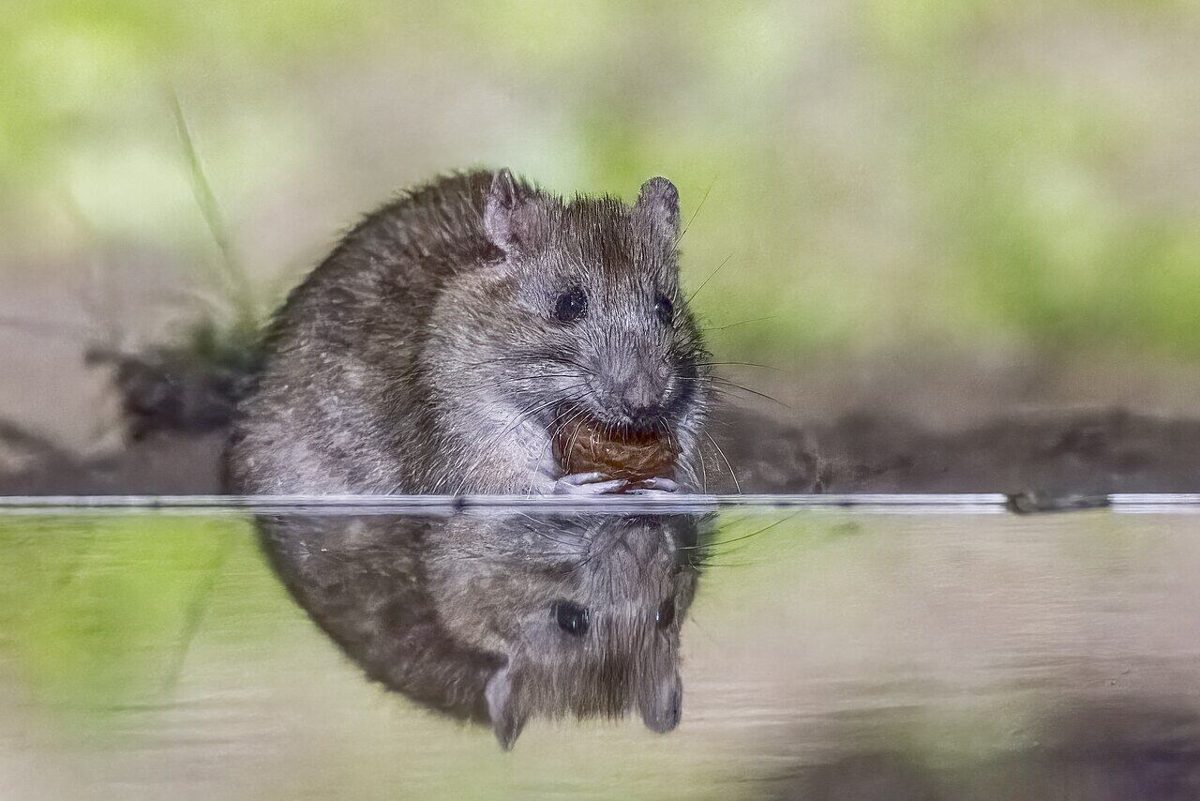
To get rid of rats in Spokane, take away their food, trap them where they travel and seal the gaps they use to get into the house. In that order, and all three. Most rats in Spokane yards and homes are Norway rats, heavy brown rats that burrow under sheds, slabs and foundations and nest in crawl spaces and basements.
The plan below works for a homeowner with a few rats. If you have rats in several parts of the house, in the walls or in a building with neighbors, it may be faster to have a technician do it. Either way, the steps are the same.
Confirm it is rats
Rats and mice need different traps and leave different signs, so check first.
- Droppings: rat droppings are capsule-shaped and about half an inch to three quarters of an inch long. Mouse droppings are the size of a grain of rice. See rat droppings identification.
- Burrows: round holes two to four inches across along a foundation, fence, shed floor or garden bed, often with packed dirt at the opening.
- Rub marks: greasy dark smudges along walls and beams where rats brush past.
- Sounds: heavier thumping or dragging under the floor or in the walls at night.
- Gnawing: chewed wood, plastic and wiring with larger tooth marks than a mouse leaves.
In Spokane, the crawl space, basement, garage and yard are the usual places to look. Older homes with stone foundations and alleys behind them see the most rat activity.
Take away the food
Rats stay where food is easy. Spokane yards feed rats in a few predictable ways:
- Bird seed spilled under feeders
- Chicken feed in open feeders or plastic bins
- Pet food left on porches or in garages
- Compost piles and bins without a solid bottom
- Fallen apples and other fruit
- Garbage carts with lids that do not close
Fix those first. Store seed and feed in metal cans with tight lids, use a covered chicken feeder, feed pets indoors, pick up fruit and keep cart lids shut. The City of Spokane asks residents not to let material stick out of garbage carts, which also happens to keep rats out of them. The trash and yard rules guide has more.
Cutting food also makes traps work better. A rat with a pile of seed nearby has less reason to try something new.
Rats in more than one spot? Get a technician.Free call. You are connected with an independent provider near you.
(509) 401-4897Tap to callTrap the right way
CDC recommends traditional snap traps for reducing rodents around the home and advises against glue traps and live traps, which can scare rodents into urinating and raise the risk of disease. Use rat-sized snap traps, not mouse traps.
How to set them:
- Find the runways: the paths along walls, fences and foundations where you see droppings and rub marks.
- Set traps flat against the wall with the bait end touching it, so the trap forms a T with the wall, as CDC describes.
- Bait with a small amount of peanut butter. CDC says chunky peanut butter or mutton fat works best.
- Rats avoid new objects for a while. Some people leave traps baited but unset for a few days so the rats get used to them, then set them.
- Use several traps, not one. In a crawl space or garage, set them a few feet apart along walls.
- Check traps daily. CDC says to keep trapping until you catch no rodents for a week and see no new signs.
Put traps in enclosed boxes or behind barriers where kids and pets can reach them. For outdoor rats, see rat burrow treatment.
Seal the house
Trapping removes the rats you have. Sealing stops the next ones. CDC suggests steel wool held in place with caulk or spray foam for small holes, and lath screen or metal, cement, hardware cloth or metal sheeting for larger ones. Foam by itself does not stop rats.
In Spokane houses, check these spots:
- Crawl space vents, where screens often rust out or get pushed in
- Gaps in stone, rubble or old concrete foundations
- The sill plate, where the wood frame sits on the foundation
- Old coal chutes and loose basement windows
- Gaps around water, gas and electrical lines
- The bottom and corners of the garage door
Seal while trapping continues, and do not seal a hole you know rats are using until they stop using it. Otherwise a rat can end up trapped inside a wall. The exclusion page explains what a full job includes.
Clean up safely
Once the rats are gone, clean up droppings and urine without sweeping or vacuuming. CDC says to open doors and windows for 30 minutes first, wear rubber or plastic gloves, spray droppings with disinfectant or a mix of 1 part bleach to 9 parts water, let it soak for 5 minutes, then wipe it up with paper towels and bag it.
Dead rats go in a sealed bag in the garbage cart. Wash your hands afterward, even if you wore gloves.
If droppings are spread through a crawl space, attic or insulation, see crawl space rodent control and attic cleanup.
When to call for help
DIY works for a few rats in a garage or shed. Call a technician if:
- Traps catch nothing for a week but you still see fresh droppings
- You hear rats in more than one part of the house
- Rats are in the walls or ceiling
- You cannot find where they get in
- The crawl space is too tight or unpleasant to work in
- There are burrows on several properties along your alley
Ask for a written plan that includes trapping, sealing and return visits. The Spokane rat control page explains what a thorough job includes.
Talk to a local rodent technicianFree call. Ask for a written plan and quote before any work starts.
(509) 401-4897Tap to callCommon questions
What kind of rats live in Spokane?
Spokane technicians mostly deal with Norway rats, also called brown rats. They burrow and nest low in crawl spaces, basements, garages and yards.
Can I get rid of rats without poison?
Yes. Snap traps on the runways plus sealing the gaps is the usual approach inside homes. Poison can leave a dead rat in a wall and puts pets and wildlife at risk.
How long does it take to get rid of rats?
A small group can be trapped in a week or two. Larger problems take several weeks of trapping and sealing.
Why are traps not catching anything?
Rats are wary of new objects. Leave traps baited but unset for a few days, put them right on the runway against the wall and use several.
Should I fill rat burrows in my yard?
Deal with the rats first. Filling an active burrow usually just makes them dig a new hole nearby.