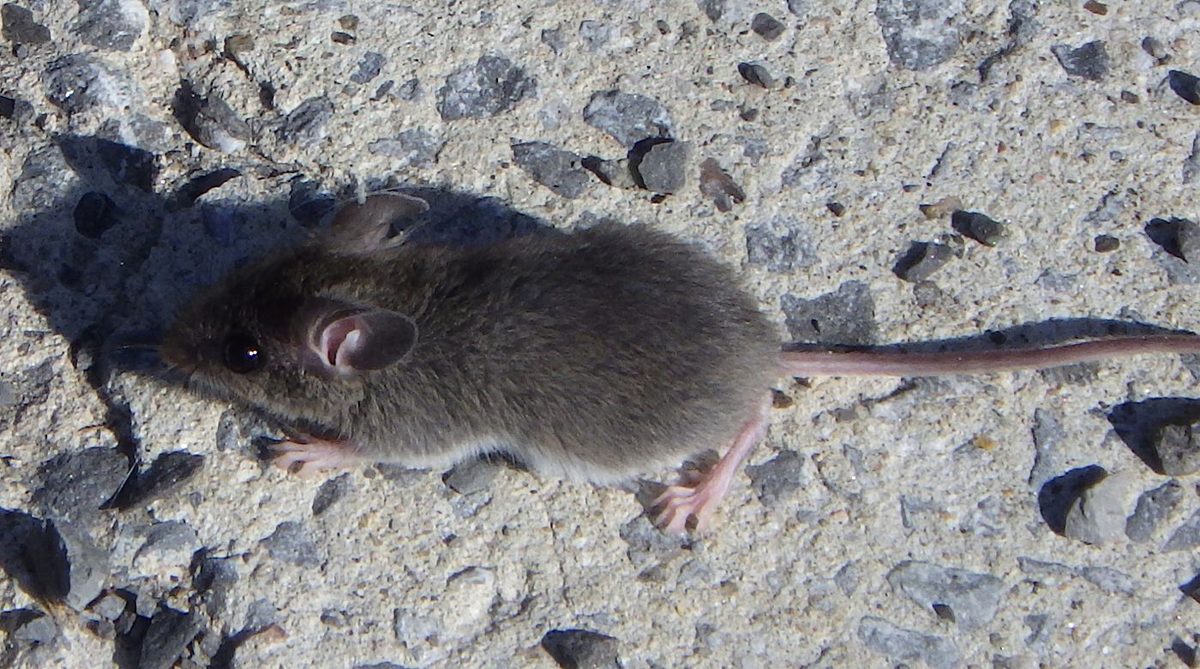
Mice get into car engines in winter because an engine that just ran is warm, the engine bay is sheltered from wind and snow and the insulation and air filter make good nesting material. Cars, trucks, campers, boats and lawn equipment parked for days or weeks around Spokane are common targets, especially when they sit near fields, woodpiles or a garage that already has mice.
The damage can be expensive. Mice chew wiring, build nests on the engine and in the air filter box and leave droppings in the cabin air system.
Signs mice are in your vehicle
Check for these, especially after a cold snap or if the vehicle has been parked a while:
- Nesting material on the engine, in the air filter box or behind the battery: shredded insulation, paper, leaves, grass or fabric
- Droppings on the engine, on the floor mats or in the trunk
- Chewed wires, hoses or insulation under the hood
- A musty or urine smell when the heater or fan runs
- Seed shells or pet food stashed in the engine bay or glove box
- Warning lights or electrical problems that appear suddenly
If the fan smells bad, mice may have nested in the cabin air filter or ductwork.
Why Spokane winters make it worse
Cold weather is the main reason. When nights drop below freezing, mice look for warm, sheltered spots, and a car that just came home stays warm for hours. Vehicles parked outside on the West Plains, near open fields on the North Side or next to woodpiles and outbuildings on rural lots sit close to large mouse populations.
Garages help, but only if the garage is sealed. A garage with a worn door seal and stored bird seed, grass seed or pet food often has mice already, and the car is the nearest warm spot.
Seasonal vehicles are at the highest risk: campers, boats, RVs, classic cars and lawn tractors that sit from October to April.
Mice in the garage too? Get the gaps sealed.Free call. You are connected with an independent provider near you.
(509) 401-4897Tap to callCleaning up safely
Treat mouse nests and droppings in a vehicle the same way you would in a shed. Around Spokane, any of them could be from deer mice, which the Washington State Department of Health calls the major carrier of hantavirus in the state.
- Open the hood, doors and windows and let the vehicle air out before you start.
- Wear gloves.
- Spray nests and droppings with disinfectant or a mix of 1 part bleach to 9 parts water and let it soak for 5 minutes.
- Remove the material with paper towels and bag it.
- Do not use compressed air or a shop vacuum on dry droppings.
- Replace the cabin air filter if mice nested in it.
Have a mechanic check any chewed wiring before you take the vehicle on a long trip. Damaged wires can cause electrical problems that are hard to trace.
Keeping mice out of vehicles
What helps most:
- Seal the garage. Replace the door bottom seal, close corner gaps and store seed and pet food in metal cans. See exclusion and sealing.
- Remove food from the vehicle, including wrappers and pet treats.
- Use the vehicle regularly. Mice prefer undisturbed spots.
- Set snap traps in enclosed boxes around the parked vehicle in the garage or shop.
- Park away from woodpiles, tall grass and brush.
- For stored vehicles, open the hood and check every few weeks.
People use many home remedies, like peppermint oil, dryer sheets and ultrasonic devices. Evidence for repellents is weak, and Cornell's integrated pest management program has said scientific evaluations of ultrasonic devices found no effect on rodents. See do rodent repellents work.
When the house is involved
Mice in the car often mean mice in the garage, and mice in the garage often mean mice in the house. Check the garage for droppings along the walls and in stored boxes, and look at the door between the garage and the house.
If you find signs in the garage and the house, read how to get rid of mice in Spokane or call a mouse technician.
Seasonal vehicles and equipment
Campers, boats, motorcycles and lawn equipment stored from fall to spring are the most common targets. A few steps before storage help:
- Clean out all food, wrappers and pet treats.
- Close windows and vents and plug the exhaust and air intakes with steel wool while stored, with a reminder tag on the steering wheel to remove it before starting.
- Store bedding, cushions and fabric in sealed plastic bins.
- Set enclosed snap traps around the vehicle.
- Check every few weeks through the winter.
When you bring a camper out in spring, air it out before cleaning, and treat any droppings with the CDC steps.
Talk to a local rodent technicianFree call. Ask for a written plan and quote before any work starts.
(509) 401-4897Tap to callCommon questions
Why do mice go into car engines?
In cold weather, an engine that just ran is warm and sheltered. Insulation and the air filter make easy nesting material.
Does peppermint oil keep mice out of cars?
There is little good evidence that it works for long. Sealing the garage and trapping are more reliable.
Is car wiring damage from mice covered by insurance?
It depends on your policy. Call your insurer and ask.
How do I clean mouse droppings out of my car?
Air it out, wear gloves, soak droppings with disinfectant, wipe them up and bag them. Do not vacuum or blow them out dry.
How do I know if mice chewed my car wiring?
Warning lights, electrical problems that come and go, or visible chewed insulation under the hood. Have a mechanic check it before a long trip.