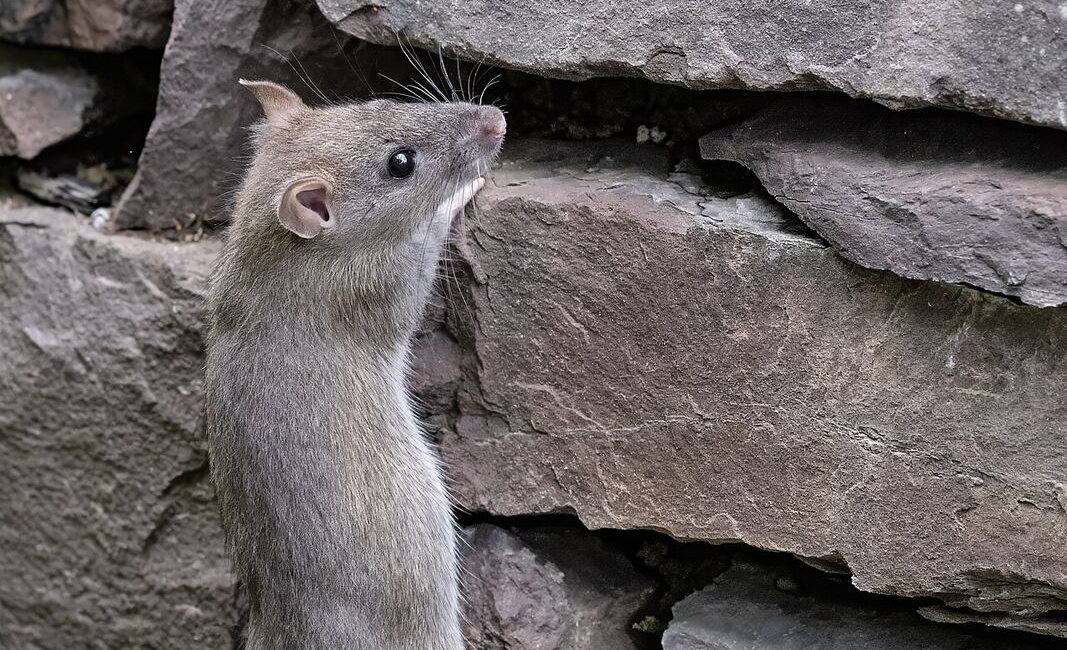
The sounds in your walls, ceiling or floor at night tell you a lot. Light, fast scratching or skittering is usually mice. Heavier thumping, dragging or loud gnawing is more likely rats. Noise in the attic mostly during the day, especially early morning, often means squirrels. Where the sound comes from narrows it down further, and so does the time of night.
Light scratching and skittering
A soft, quick scratching or pitter-patter inside a wall or ceiling, usually after dark or before dawn, is the classic mouse sound. It may move along a wall, go up and down inside it or stop and start.
Mice are small and light, so the sound is faint. People often hear it only when the house is quiet. It tends to be near the kitchen, bathrooms, the laundry room or rooms over the furnace, where it is warm and close to food.
In Spokane, these sounds usually start in the fall. See mice in walls.
Thumping, dragging and gnawing
Heavier sounds point to rats. Norway rats are much bigger than mice, and they move with more weight. You might hear thumps, something being dragged, or loud, steady gnawing on wood.
In Spokane, rat noise is most often under the floor, from the crawl space or basement, because Norway rats live low. Noise from a crawl space can travel through floor registers and pipes, so it may seem to come from a room above.
If you hear heavy noise under the house, check the crawl space vents outside for damaged screens and look for burrows along the foundation. See crawl space rodent control.
Not sure what is making the noise? Get it inspected.Free call. You are connected with an independent provider near you.
(509) 401-4897Tap to callDaytime noise in the attic
Rats and mice are mostly active at night. If you hear running, rolling or heavy scratching in the attic in the morning or during the day, a tree squirrel is a strong possibility. Squirrels are active in daylight and can sound surprisingly loud.
That matters because squirrels are a different job. This site covers rats and mice only, so a provider may refer you to wildlife removal if squirrels turn out to be the problem. The inspection will sort it out.
Nighttime attic noise in Spokane is more often mice that climbed up inside the walls or came in at a soffit.
Squeaking and chirping
Mice sometimes squeak, especially when young ones are in a nest. A high-pitched chirping from one spot in a wall or ceiling, repeated over a few days, can mean a nest of young mice.
That is a sign to act soon. Young mice grow quickly, and a nest means the population is about to grow.
How to find the source
A few tricks help locate the noise:
- Note the time and place each time you hear it. A pattern helps a technician.
- Check below and above the noise. Look in the crawl space or basement under it and the attic above it for droppings.
- Look for droppings near the closest openings: under sinks, behind appliances and around heating registers.
- Sprinkle a light dusting of flour along a baseboard or in the crawl space and check for tracks in the morning.
- Listen at different walls with a glass or your ear against the wall.
Then trap and seal. For mice, CDC recommends snap traps set with the bait end against the wall. For rats, use rat-sized traps. See how to get rid of mice in Spokane or how to get rid of rats in Spokane.
When it is time to call
Call for help if the noise continues after a couple of weeks of trapping, if it is in several parts of the house or if you hear heavy noise that might be rats in the walls or ceiling. A rodent inspection will tell you what is there and how it gets in.
Noises that are probably not rodents
Not every sound at night is a rodent. Houses make noise as temperatures drop, and Spokane winters bring a lot of that.
- Popping or ticking in walls and ceilings is often the house frame contracting as it cools, especially on cold nights.
- Knocking or banging in pipes is often water hammer or expansion in heating pipes.
- Rhythmic clicking near a vent may be ductwork expanding and contracting as the furnace cycles.
- Insects, like crickets, can chirp from inside walls.
Rodent noise is usually irregular, moves around and comes with other signs like droppings or chewed food. If you only hear the sound when the furnace runs, check the furnace first.
Talk to a local rodent technicianFree call. Ask for a written plan and quote before any work starts.
(509) 401-4897Tap to callCommon questions
What does a mouse in the wall sound like?
Light, quick scratching or skittering, often at night or before dawn, that moves along the wall.
How can I tell rats from mice by sound?
Rats are louder and heavier: thumping, dragging and steady gnawing. Mice make lighter scratching sounds.
Why do I hear noise in the attic in the morning?
Daytime attic noise often points to squirrels, which are active in daylight. Rats and mice are mostly active at night.
Can noise under the floor be rats?
Yes. In Spokane, Norway rats often live in crawl spaces and basements, and their noise carries up through the floor.
Could the noise be the house settling?
Yes. Popping and ticking on cold nights is often the house frame contracting. Rodent noise is irregular, moves around and comes with droppings or gnaw marks.
Should I bang on the wall to scare them?
It may quiet them for a moment, but they come back. Trapping where they leave the wall and sealing the routes is what stops the noise.