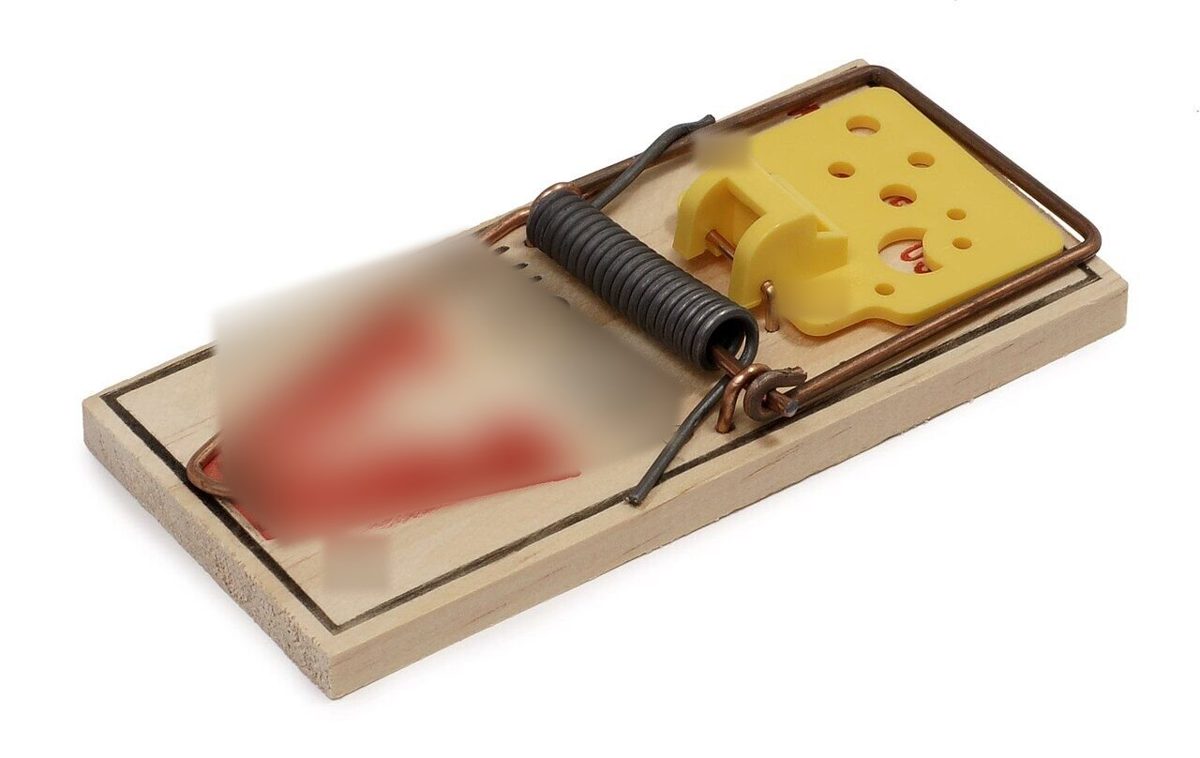
The best trap for most homes is the plain snap trap, sized for the animal you have: mouse traps for mice and the larger rat traps for rats. CDC recommends traditional snap traps for reducing rodents around the home and advises against glue traps and live traps, which can scare rodents into urinating and raise the chance of disease.
Placement matters more than brand. A cheap snap trap set right against a wall on a runway will out-catch an expensive trap set in the middle of the floor.
Snap traps
Wooden and plastic snap traps are cheap, fast and reliable. Plastic models with a large trigger plate are easier to set and clean. Wooden ones are cheaper and work just as well.
Size matters. A mouse trap will not hold a Norway rat, and a rat trap set for mice may not trigger under a light mouse. If you are not sure what you have, check the droppings. See rat droppings identification and mouse droppings identification.
Set snap traps inside an enclosed trap box or behind a barrier if children or pets can reach them.
Enclosed and electric traps
Enclosed snap traps put the trap inside a plastic box with an entry hole. They keep fingers and paws away and hide the catch, which some people prefer. They work well in garages, kitchens and around kids.
Electric traps kill with a shock inside a covered chamber. They are more expensive and need batteries, but they are clean to empty. Fixr lists electric trapping at the higher end of trapping costs when a provider supplies them.
Both types follow the same placement rules as plain snap traps.
Traps not working? Get a technician to place them.Free call. You are connected with an independent provider near you.
(509) 401-4897Tap to callGlue traps and live traps
CDC advises against glue traps and live traps. Both can frighten rodents into urinating, which raises the risk of getting sick from handling them. Glue traps also cause a slow death and can catch birds, pets and other animals by accident.
Live traps leave you with a live mouse or rat to deal with. Releasing it nearby usually means it comes back, and handling it puts you in contact with urine and droppings.
How to bait and place traps
CDC's guidance:
- Use chunky peanut butter or mutton fat. A small amount is enough.
- Set the trap flat on the floor against the wall, with the baited end touching the wall, so the trap and wall form a T.
- Put traps where you see droppings, gnaw marks or rub marks.
- Check traps every day and remove catches promptly.
- Keep trapping until nothing is caught for a week and no new signs appear.
A few more tips:
- Use many traps. For mice, a few feet apart along walls where you see activity.
- For rats, leave traps baited but unset for a few days so they get used to them.
- Wear gloves when setting and emptying traps.
- Put traps in the crawl space, basement, garage and attic as well as the kitchen.
For the full plan, see how to get rid of mice in Spokane or how to get rid of rats in Spokane.
What about bait stations?
Bait stations hold rodenticide inside a locked box. Under EPA rules, consumer rodenticides are sold only as ready-to-use bait stations, and second-generation anticoagulants are not allowed in consumer products.
Bait has drawbacks inside a house. A mouse or rat that eats bait can die inside a wall or under the floor, where the smell lingers. Rodenticides also put pets and wildlife at risk, including owls and hawks that eat poisoned rodents. Inside homes, many technicians stick with traps for those reasons and use bait only outside in locked stations, if at all.
The Washington license guide covers the federal and state rodenticide rules.
Disposing of catches
Wear gloves. Spray the dead rodent and trap with disinfectant or a bleach solution, wait 5 minutes, then put the rodent in a plastic bag, seal it, put it in a second bag and drop it in the garbage cart. CDC says to wash gloved hands before taking the gloves off, then wash your bare hands.
Traps can be reused after cleaning. Throw out traps that are damaged or heavily soiled.
Where to set traps in a Spokane house
The kitchen gets most of the attention, but in Spokane homes the best trap spots are often lower and farther out:
- Along the garage walls, especially behind stored boxes and near seed or pet food
- In the crawl space along the foundation walls, near vents and pipes
- In the basement around the furnace, water heater and laundry
- Under the kitchen and bathroom sinks, where pipes come through the floor
- In the attic along the eaves, if you hear noise overhead
Mice usually reach the kitchen from one of those spots. Catching them there means fewer in the living space.
Talk to a local rodent technicianFree call. Ask for a written plan and quote before any work starts.
(509) 401-4897Tap to callCommon questions
What is the best trap for mice?
A plain snap trap, set against a wall with the bait end touching it. CDC recommends traditional snap traps.
Why does CDC discourage glue traps?
They can scare rodents into urinating, which raises the risk of disease, and they are slow and catch other animals.
What bait works best?
CDC says chunky peanut butter or mutton fat works best.
How many traps should I use?
More than you think. For mice, several along each wall with activity. For rats, several in each area they use.
Can I reuse traps?
Yes, after disinfecting them. Throw away damaged or heavily soiled traps.